

Tibu Africa: The Moroccan NGO Changing Young Lives With Sport
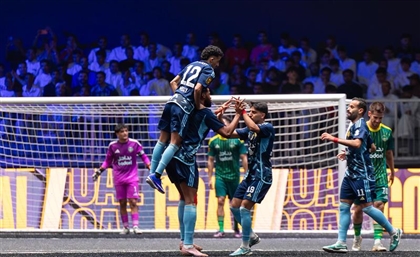
Mohamed Amine Zariat represented Morocco on the basketball court before founding Tibu Africa, a sport development organisation now reaching hundreds of thousands of young people across the continent.
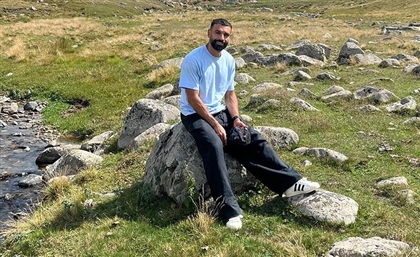
Mohamed Amine Zariat didn’t set out to run one of Africa’s largest sports for youth development organisations. He wanted to play basketball. As a teenager, he had the kind of ambition that narrows everything around it.
During his tenure as a professional player, he represented Morocco in the African Championships and the Arab Championships. When the door to the professional path officially closed, it closed hard. Morocco had no real infrastructure allowing athletes to balance sport and education simultaneously, and Zariat chose his studies. “Looking back, it was the right decision,” he recalls. “But when you're completely in love with basketball, it was a very difficult choice to make.”
-23fa7ee1-a6d8-4808-bc4f-9cb67f9483e5.png) That decision, and the frustration rooted in it, planted the seed for Tibu Africa. “It started as an event, actually.”
That decision, and the frustration rooted in it, planted the seed for Tibu Africa. “It started as an event, actually.”
While still a student, Zariat organised the International University Basketball Tournament (Tibu) with almost no money and no network. The tournament worked, not only logistically, but as proof of something. “I realised how important it is to give young people an opportunity to experience success early on,” he shares. “Once they experience it, they begin to believe that bigger things are possible."
That was his turning point. “I realised that with hard work, anything could be achieved.”
Following the success of its first edition, Zariat registered what was known at the time as Tibu Maroc as an NGO. Over time, he came to understand the impact the organisation was creating was not fixed in basketball. “I realised that it wasn't just basketball that could create impact, it could be football, rugby, tennis, or any sport. What mattered wasn't the ball itself, but having people who could help young people unlock their potential.”
From there, Tibu shifted from a basketball-focused organisation into one that addresses social issues in Morocco through sport. Zariat became dedicated to building programmes around education, employability, and social entrepreneurship. Today, it employs more than 600 people and reaches hundreds of thousands of young people across more than 60 cities in Africa.
“Many people focus only on major cities like Casablanca or Marrakech,” Zariat explains, “but there is enormous potential in smaller cities and rural communities.” In some smaller regions, the organisation employs hundreds of people. The reason it has been able to grow, Zariat argues, is straightforward. “Our work aligns closely with national priorities around education, health, employment, inclusion, entrepreneurship, and youth development. Because it addresses real needs, it naturally has the potential to grow.”The pivot that changed Tibu’s scale came in 2018, when the organisation partnered with Morocco's Ministry of National Education. Zariat shared that over 7,000 primary schools do not have access to physical education classes. “That means over 4.5 million children from the ages of six to 12 are not benefiting from sport.”
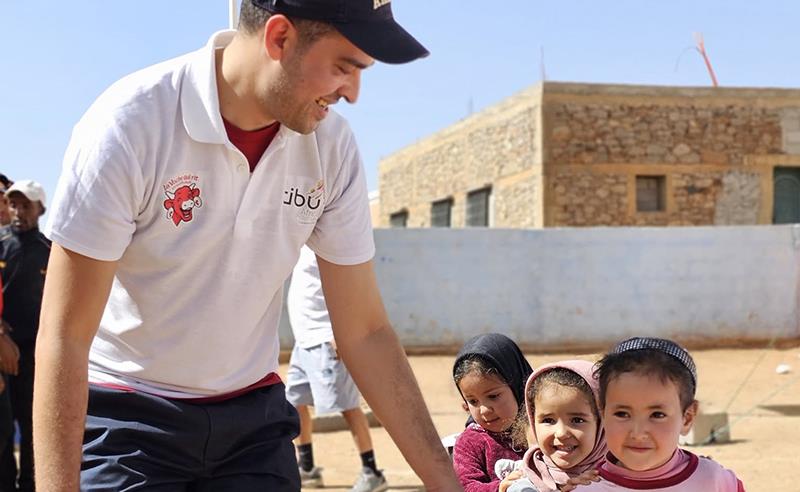
Tibu’s response was to provide schools with trained coaches and sports equipment, delivering programmes in health, hygiene, and life skills. The curriculum is built around the UN's Sustainable Development Goals, which place quality education, good health, and gender equality at its centre. The results have been measurable, showing improved grades, lower dropout rates, and a model now active in more than 450 schools, having reached over 200,000 children.
-60903c37-2ae7-480e-95c8-66252d2808cd.png) Alongside this, Zariat launched a School of Second Chance as a part of an established national network supporting young dropouts back into education and work. Participants spend a year studying coaching, languages, entrepreneurship, financial literacy, and event management before completing internships and graduating with a diploma recognised by the Kingdom of Morocco. Employment rates for graduates range from 72% to 100% depending on the location.
Alongside this, Zariat launched a School of Second Chance as a part of an established national network supporting young dropouts back into education and work. Participants spend a year studying coaching, languages, entrepreneurship, financial literacy, and event management before completing internships and graduating with a diploma recognised by the Kingdom of Morocco. Employment rates for graduates range from 72% to 100% depending on the location.
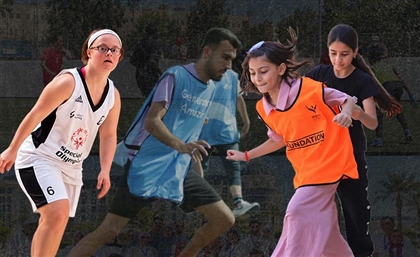
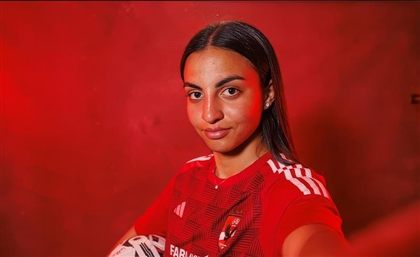
Girls and women sit at the centre of Tibu’s programming. The organisation operates by an internal principle it calls “50/50”; across all programmes, at least half of all students, coaches, and staff must be women. Tifu, Tibu’s girls’ football initiative, runs across more than 14 centres, pairing football training with education, health awareness, and life skills. Several participants have gone on to join major football clubs. Mama Fit, meanwhile, supports women from vulnerable backgrounds through sport and wellness activities while helping them develop small businesses.-77bdde74-d199-4dda-b233-32a369577b25.png) One name comes up when Zariat talks about what the work looks like in practice. Lahcen El Mejdoubi from Tangier dropped out of school at 15, passionate about cycling, and arrived at the School of Second Chance after an accident derailed his athletic plans. He struggled early on, his French was weak and he wanted to walk away. Zariat encouraged him to stay. Today, Mejdoubi runs MJ Bike, a cycling and eco-tourism startup, with a new franchise recently opened in Rabat, and he is training for Ironman competitions. “When young people see someone from the same neighbourhood who has built a startup or created a successful career," Zariat shares, "it becomes tangible and inspiring."
One name comes up when Zariat talks about what the work looks like in practice. Lahcen El Mejdoubi from Tangier dropped out of school at 15, passionate about cycling, and arrived at the School of Second Chance after an accident derailed his athletic plans. He struggled early on, his French was weak and he wanted to walk away. Zariat encouraged him to stay. Today, Mejdoubi runs MJ Bike, a cycling and eco-tourism startup, with a new franchise recently opened in Rabat, and he is training for Ironman competitions. “When young people see someone from the same neighbourhood who has built a startup or created a successful career," Zariat shares, "it becomes tangible and inspiring."
Scaling to this point has not been without friction. For Zariat, the hardest obstacle was never infrastructure or funding but building an understanding around a model that didn't fit existing categories. “When you're introducing something new, you have to spend a lot of time explaining how it works and why it's sustainable.”
-ff2a142f-5103-4dbc-ad39-281507df3149.png) When the School of Second Chance first launched, many employers were reluctant to offer internships to young people who had dropped out of school. “Instead of saying ‘this person is a dropout,’ we say ‘this is a young person passionate about sport who wants to build a career in the industry.’” The other persistent challenge was talent, as there was no established ecosystem for sport-for-development work in Morocco or across Africa. Tibu had to train people from scratch.
When the School of Second Chance first launched, many employers were reluctant to offer internships to young people who had dropped out of school. “Instead of saying ‘this person is a dropout,’ we say ‘this is a young person passionate about sport who wants to build a career in the industry.’” The other persistent challenge was talent, as there was no established ecosystem for sport-for-development work in Morocco or across Africa. Tibu had to train people from scratch.
The organisation’s partnerships now span the Ministry of National Education, UN agencies including UNESCO, UN Women, and UNFPA, and, since 2025, Generation Amazing, a social legacy programme tied to the 2030 FIFA World Cup. One of their first joint projects was building a football pitch in Douar Laouala, near Asilah, where more than 300 children now benefit from educational football programmes in an area that previously had no sports infrastructure at all.
-57b28b47-6df2-407c-9fc5-9b3671c9144e.png) In 2024, Zariat was named Social Entrepreneur of the Year at the Schwab Foundation Social Innovation Awards, an award he had watched others receive from a distance for years. "It was a dream," he says. "Years ago, I would see coverage of the event and wonder whether I would ever be recognised in that way." The recognition connected him to a global network of social entrepreneurs and opened doors to executive education that has shaped how he thinks about what comes next.
In 2024, Zariat was named Social Entrepreneur of the Year at the Schwab Foundation Social Innovation Awards, an award he had watched others receive from a distance for years. "It was a dream," he says. "Years ago, I would see coverage of the event and wonder whether I would ever be recognised in that way." The recognition connected him to a global network of social entrepreneurs and opened doors to executive education that has shaped how he thinks about what comes next.
-9b028ac2-92d8-4e6e-9cb3-d36f819ead3f.png) What comes next has a specific target. By 2030, Zariat wants every one of Morocco’s 4.5 million children currently without physical education to have access to sport in school, a goal he estimates would also generate more than 10,000 jobs. Beyond that, he is pushing for sport to be formally recognised in the UN's development agenda after 2030. "We believe sport should be recognised as a powerful tool for developing communities and countries," he says.
What comes next has a specific target. By 2030, Zariat wants every one of Morocco’s 4.5 million children currently without physical education to have access to sport in school, a goal he estimates would also generate more than 10,000 jobs. Beyond that, he is pushing for sport to be formally recognised in the UN's development agenda after 2030. "We believe sport should be recognised as a powerful tool for developing communities and countries," he says.
As for obstacles, Zariat is direct. "If someone says no, we keep looking for a yes."
- Previous Article Ziyad Almaayouf Returns to Jeddah for First Home Fight in a Year
- Next Article Registration Opens for the 34th Egyptian Marathon in Luxor