

Maadi Players Are Building Egypt’s Tchoukball Community
Basem Boules is using Saturday games, federation training and plans for schools and clubs to build an Egyptian community around tchoukball.
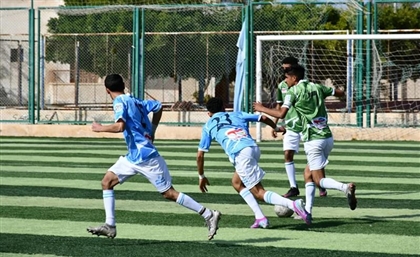
Tchoukball is built around a counterintuitive idea for a team sport: players never have to stop their opponents.
Swiss doctor Hermann Brandt introduced the sport in 1970 with the aim of reducing injuries and aggressive physical contact between players.
That philosophy shaped some of its most unusual rules. Defenders cannot intercept passes or obstruct the attacking team, leaving the competition to depend on anticipation, movement and reading where the ball is likely to go next.
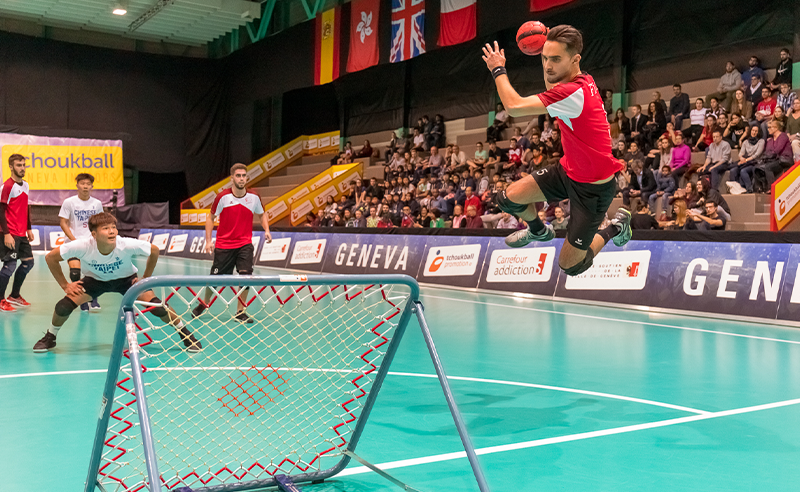
 Played between two teams of seven, the game revolves around a ball and two rebound frames, one at either end of the court. Players pass the ball between themselves before shooting it at either frame, sending it bouncing back into the playing area.
The opposing team then has to catch the rebound before the ball hits the ground. If they fail, the attacking side scores a point.
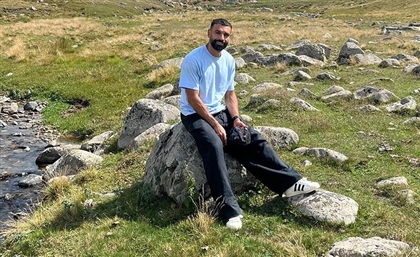
For Basem Boules, discovering Tchoukball took him from trying an unfamiliar sport with friends to helping build a community around it in Egypt.
 Boules says he represents the International and African Tchoukball Federations in Egypt. He holds international refereeing and coaching licences and says he is a member of the African Tchoukball Federation’s board, with ambitions to give the sport a more permanent place in Egypt’s sporting landscape.
His introduction to the game came at a sports camp, when a friend named Fady was searching for something new for the group to try. Fady sent Boules several unfamiliar sports to consider, and one immediately stood out.
 “Tchoukball was the one that caught my attention the most,” he tells SceneSports.
Part of the appeal, Boules says, is how quickly someone can begin playing. Newcomers do not need professional sporting experience or a particular level of fitness to understand the basics, even as the technical demands increase considerably with practice.
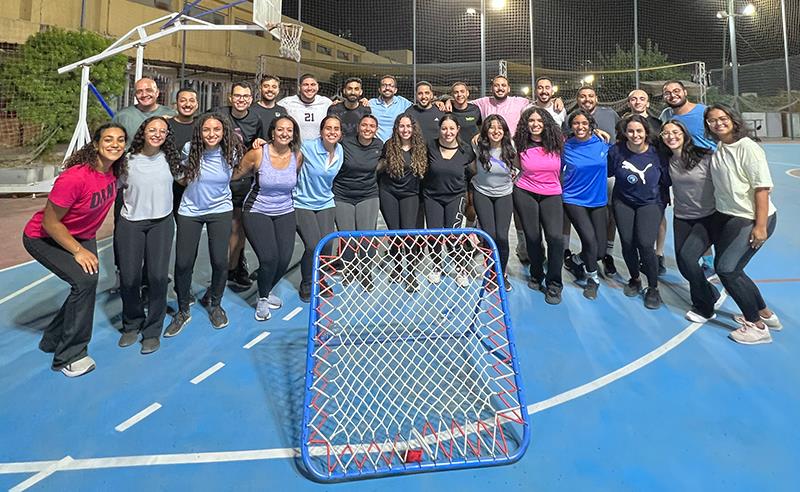
Boules wants that accessibility to remain central to the sport’s growth in Egypt. The group now meets every Saturday in Maadi, with its weekly games open to newcomers.
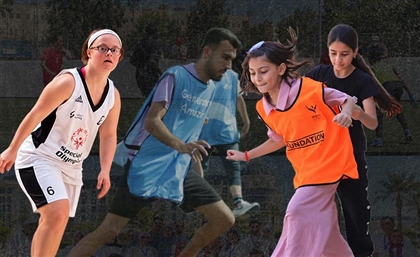
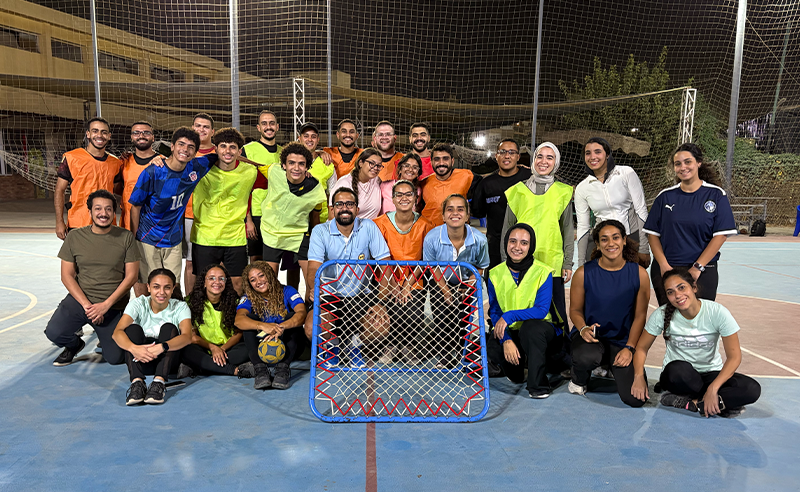 “Everyone can learn the game. It is suitable for boys and girls, adults and children, as well as people with physical disabilities,” he says. “Anyone who wants to try it can join us on Saturdays in Maadi by contacting us through Tchoukball’s global page.”
FITB also has an official adapted version of the sport for wheelchair players, part of a wider effort within the federation to make Tchoukball accessible to athletes with disabilities.
What started with Boules inviting a few friends has since grown into a wider community of around 250 to 300 people interested in the sport. Friends began bringing others to play, eventually giving the group enough momentum to establish its regular Saturday sessions.
 Attempts to recreate that momentum elsewhere in Cairo have been more difficult. Boules and the group have tried expanding into New Cairo and Heliopolis, but neither area has yet attracted enough players to sustain the same regular schedule.
Boules has also spent time building connections outside Egypt that could help the local community develop.
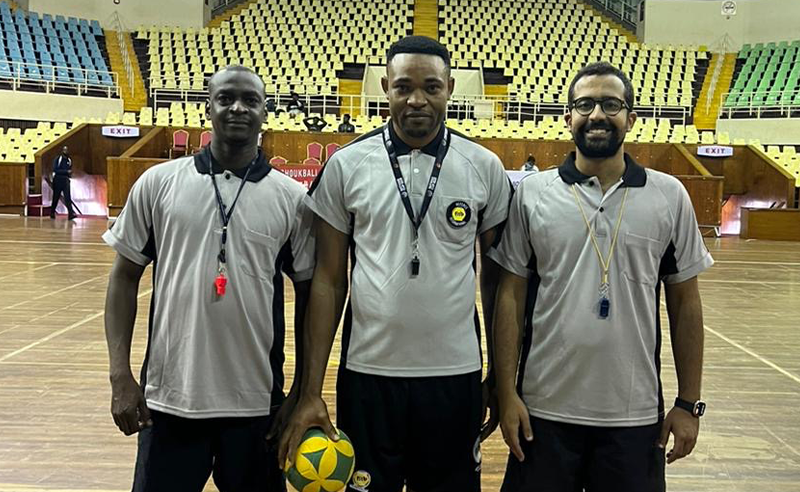
A trip to the African Championship in Kenya became an important step. Boules met officials from the International and African Tchoukball Federations, obtained his international refereeing licence and connected with representatives from several African countries. The international federation also helped provide playing equipment for the Egyptian group.
Egypt itself is not currently listed as a member federation by the International Tchoukball Federation. Its directory lists the country as a "Contact" country, reflecting a local presence without a fully established national federation.
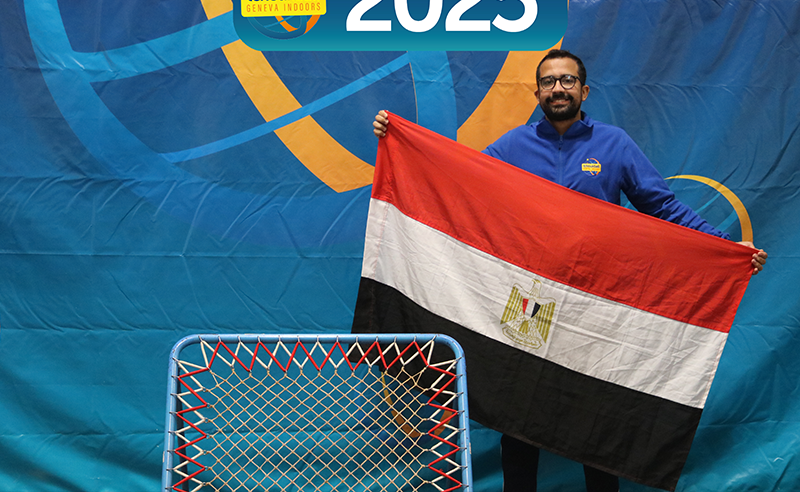
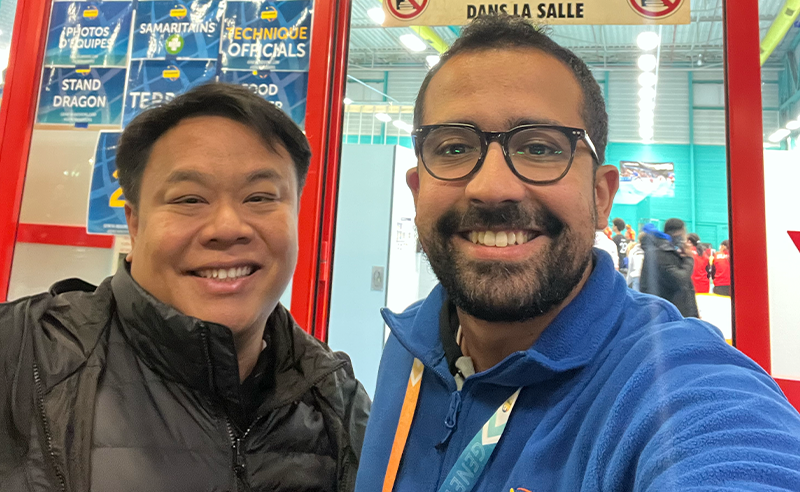 Boules continued building those international links in 2025, when he travelled to the Geneva Tchoukball Championship and refereed several matches.
He later hosted the president of the International Tchoukball Federation during a week-long visit to Egypt. The trip included a training course in the sport alongside visits to several of the country’s tourist attractions.
Boules now wants to take Tchoukball beyond informal gatherings and introduce it into schools, universities and sports clubs, where players could encounter the game through more established sporting programmes.
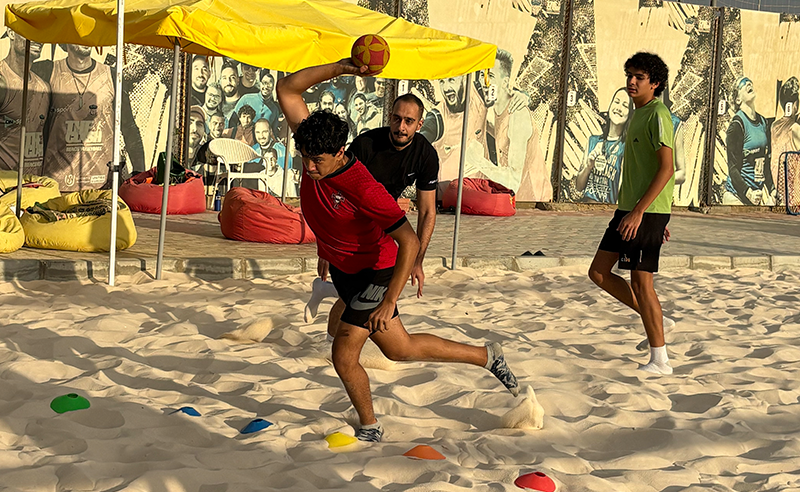
The group has also started experimenting with other versions of the sport. Its players recently tried Beach Tchoukball on a sandy court for the first time within their own activities.
For Boules, the harder part is rarely explaining the rules. It is convincing someone to try a sport they may never have heard of.
"People usually gravitate towards sports they already know, but sometimes all they need is an opportunity to try something different," he says.
"Everyone who has tried Tchoukball has come back to play with us every week. Hopefully, with the help of these players, we will eventually be able to compete in tournaments here in Egypt, as well as host and organise them ourselves.”
That is still some distance from where the sport stands today. The Maadi sessions remain the group’s most consistent base, with attempts to establish regular play elsewhere still developing.
The group is also preparing for its second Tchoukball Ramadan Tournament, though registration dates have not yet been confirmed.
For now, anyone curious enough to try the sport can start where Boules did: learn the rules, find a rebound frame and see what happens when a team game takes interception out of the equation.