

Karim Gawad Has Nothing Left to Prove, Not Even at the Olympics
Once told his body might not let him play again, the former world No.1 has stopped forcing the game. Strangely enough, that’s when he became dangerous again.

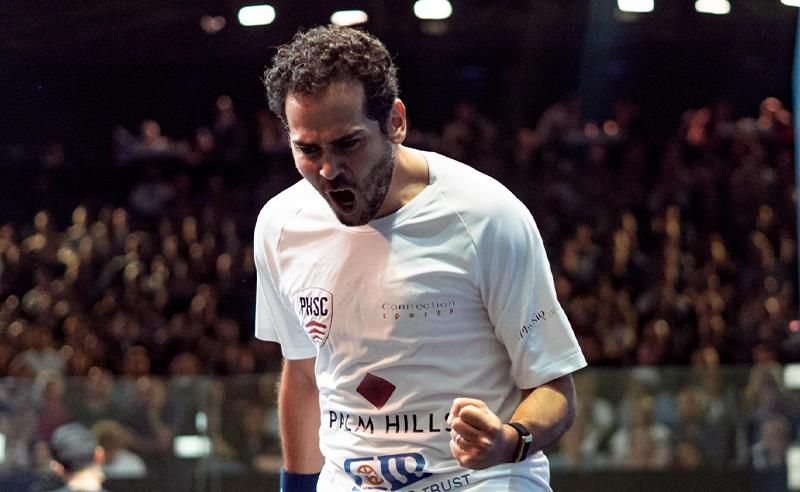
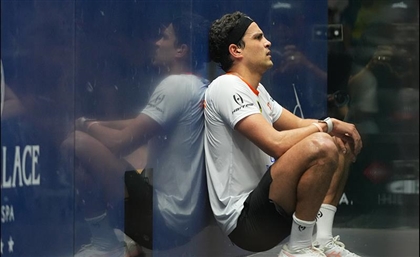
What is left to chase when you’ve already been world No.1, a world champion at 25, and a three-time world team champion with Egypt? For squash veteran Karim Gawad, now 35, the answer is disarmingly honest: nothing. And, rather paradoxically, that may be exactly why the ‘Baby-Faced Assassin’ is playing some of the most threatening squash of his career.
The numbers certainly don’t read like a man winding down. Currently ranked fifth in the world, Gawad lifted the Grasshopper Cup in April 2026, then walked into this year’s World Championship in Cairo as the fourth seed and fought his way to the semi-finals, where he fell to Youssef Ibrahim in four games. It comes just a few years after he reached the 2023 World Championship final as an unseeded player, the first to do so in over three decades.
 But to understand the lightness with which Gawad plays today, you have to understand the weight he carried before it.
The first warning came in the final of the 2020 Manchester Open, when Gawad lunged for a shot against Mohamed ElShorbagy and felt severe pain in his heel. It would turn out to be a rare injury: a German specialist later found that the fat pad cushioning his heel bone had broken down, leaving every sprint, lunge and push-off painful. For two years, Gawad played through it with cortisone injections, heel padding and a restrictive silicone sock, even working with a mental coach to cope with the discomfort during matches.
What followed was a cycle of false starts. “I played for nine months while I was injured, but I would stop for a month to get treatment, then step back on court only to feel the pain again,” Gawad tells SceneNow. “I would change doctors and try different treatments until I finally managed to travel to Germany and receive the right treatment.” By then, the pain had begun to follow him on court. It flared again in April 2022, back at the Manchester Open and, once more, against ElShorbagy. Weeks later, at the World Championships on home soil in Egypt, Gawad walked off mid-match against the same opponent, trailing two games to none and unable to continue. It was his last match for ten months, a stretch that would include four months in a wheelchair.
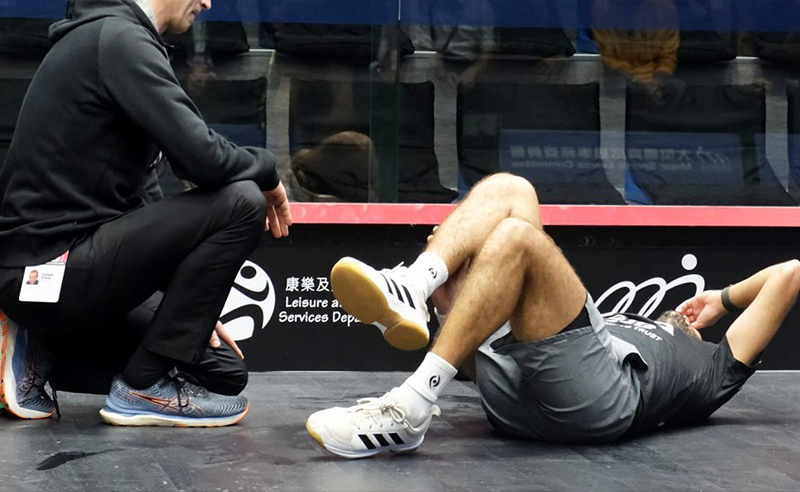 The most striking part of that period is not what Gawad wanted back, but how little. Leaving the hospital, Gawad told his physiotherapist something that, for a man who had built an entire life around a squash court, feels almost heartbreaking. “I told him that I didn’t want to play - I wanted to live as a normal human being without pain,” he recalls. “I didn’t want every move I made to be painful.”
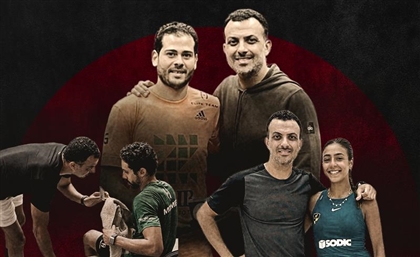
He was, by his own admission, the only one who had given up. His teammates, his coach Omar Abdelaziz and even his wife were certain he would recover and return. “I was the only one who was depressed at that time. I felt that the world was black,” he says. “I was the one who was against the whole system.” With a fifty-fifty chance of ever playing again, and surgery offering odds he wasn’t willing to gamble on, he turned to a patient, uncertain course of treatment, spending months unable to tell whether it was working at all.
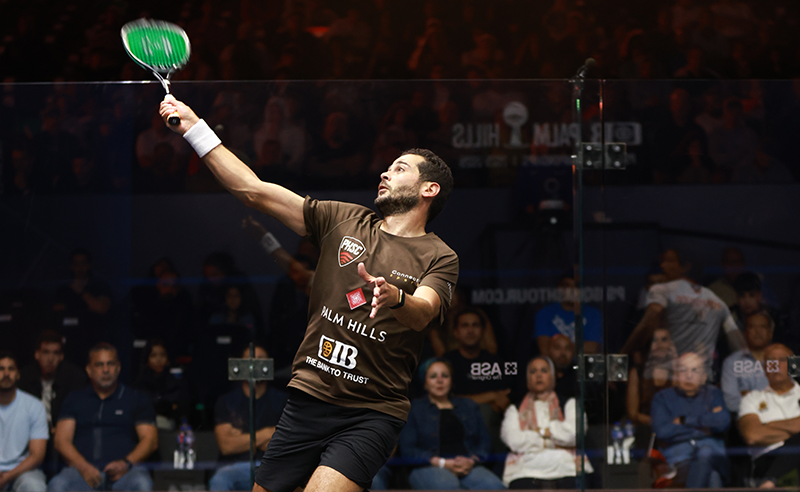 The man who refused to let him stay in that darkness was his physio, Mohamed Wafaey. Wafaey, whom Gawad met even before turning professional, closed his clinics and travelled abroad with him to appointment after appointment, arranging the doctors, the visas and the schedules. “He’s like a brother to me,” Gawad says. “For him to leave all his clinics behind, travel with me, and arrange all my appointments is something I will never forget. I never imagined that someone would do so much for me, but he did.”
After 10 months away, Gawad stepped back on court at the Black Ball Open in Egypt and played, for the first time in what felt like forever, without pain. Without any ranking points to his name, he had to climb back from scratch. He won his first match, lost a five-game thriller to ElShorbagy in the second, and within months was in the World Championship final in Chicago, losing to Ali Farag. It was a defeat, technically. For Gawad, it felt like anything but. “Reaching the final was a great achievement,” he says.
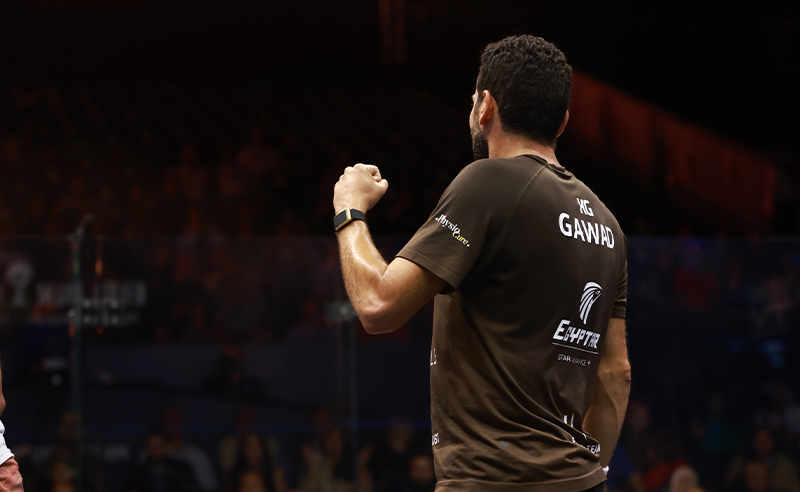 Perhaps the strangest part of that comeback is what it did to his relationship with winning. For years, Gawad admits, the game had been a mission: to win championships, to reach number one, to prove it. Today, he says, that mission has quietly dissolved. “I’ve always thought that I had to win the championship and get to number one,” he explains. “But now I want to enjoy the sport more than force myself.”
His goals have shrunk in the most liberating of ways. He wants to remain in the top eight, he says, and to play well. Beyond that, “I’m not under pressure to reach the semi-finals or the finals and try to win the championship.” Asked whether the shift came from fatherhood, he doesn’t hesitate. “This is due to me growing up,” he says. “At the end of the day, I’m turning 36, and this is my last stage in my career.”
If the philosophy sounds new, its roots are old. Gawad’s parents, who drove him from Alexandria to Cairo every day so he could train, never let results dictate the mood at home; on the days he lost after playing well, his father would buy him a gift. “One of the best things my parents taught me from a young age was to play for myself and enjoy the game,” Gawad says. “I never play under pressure. I always play to enjoy my squash and my game, regardless of the result. I always give 100%, even when it’s not my day.”
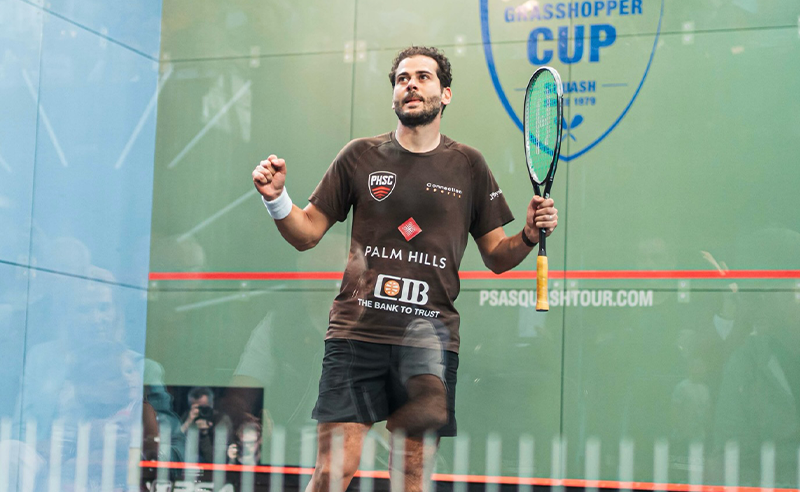 The body, meanwhile, has been rewritten into a more thoughtful machine. “I’m 35 now, and I need to be smarter with my body,” he says. “I can’t train at the same capacity as I did in my mid-twenties… I focus more on the quality.” A family man, he has also learnt to bend the calendar around his son, Youssef, choosing tournaments, particularly those in Egypt and Qatar, that fall outside the school term so his family can travel with him. “I didn’t understand why a lot of people would step back,” he admits, “but I understood that after Youssef came.”
Which brings us to Los Angeles. When squash makes its Olympic debut in 2028, Gawad will be 37, and the Games will arrive at a stage in his career when most players have long since stepped away. He is refreshingly unsentimental about it. “Of course, it’s not the best timing. It could be the only chance for me,” he says, before pointing out that the real battle isn’t the Games themselves. “I always say that qualifying for the Olympics as an Egyptian is harder than competing in the Olympics.”
It’s a fair point. With only two spots available per country and six or seven Egyptians sitting inside the world’s top ten, the road to LA runs through some of Gawad’s closest friends and rivals. “It’s going to be difficult for everyone, but it’s also going to be something that everyone will work towards, and I’m really looking forward to it,” he says. And if it doesn’t happen? “Of course, there’s pressure inside me. It’s the only chance,” he admits. “But for me, it’s not something I’ll die for.”
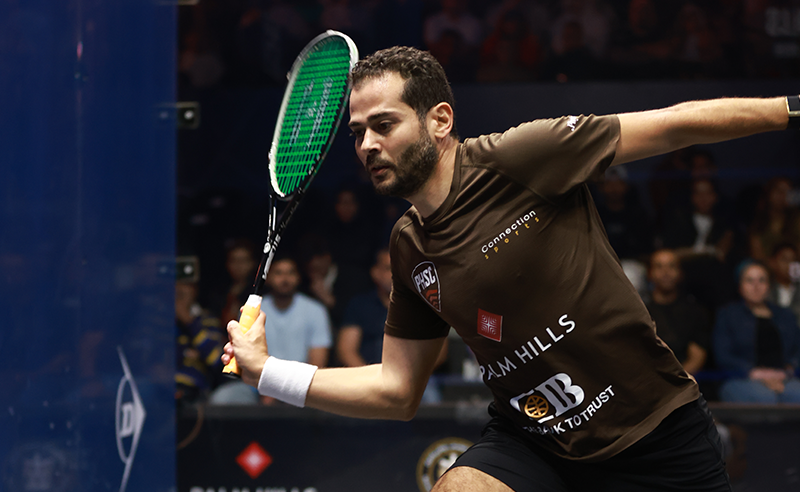 From a man who once couldn’t imagine playing again, that’s not resignation. It’s freedom.
That freedom has deep roots. Gawad’s love for squash began in the stands at the Pyramids of Giza, where, as a boy, he watched his hero play. That hero was Ahmed Barada, the former world No.2 whose rise inspired a generation of Egyptian players. “I still remember driving all the way from Alexandria with my dad and older sister to watch Barada play,” he recalls. “I would sit with the crowd, hoping Barada would win, and dreaming of being the one who caught his wristband when he threw it into the crowd. I always imagined myself playing on that court in such a spectacular venue.” He went on to win that very tournament twice.
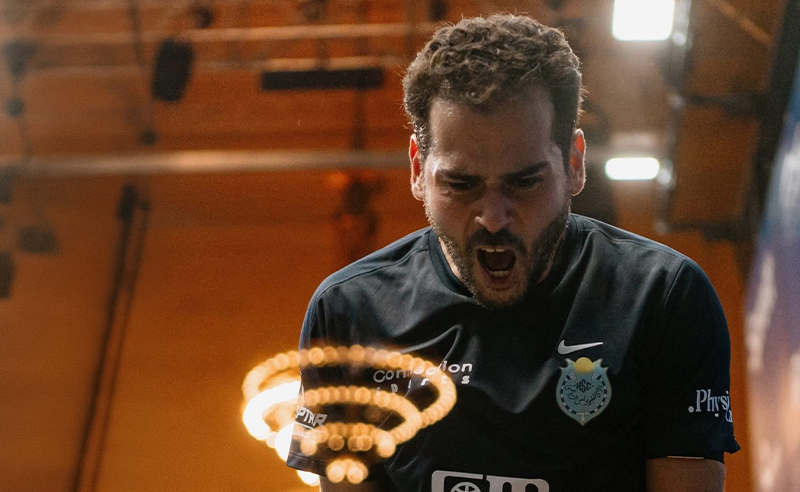 It isn’t lost on the man he once cheered from the stands. When Ahmed Barada was recently asked which of today’s players inspire him, he named Ali Farag and Karim Gawad.
For a boy who dreamt of catching a wristband, it’s hard to imagine a better inheritance. And for a man who once only wanted to live without pain, it might just be the quietest victory of all.
- Previous Article How Mohamed Salah Made a Turkish Port City His Kingdom
- Next Article Riyadh Marathon is Back For Its 6th Edition February 6th