

Squash Star Youssef Ibrahim Played a Final on a Dislocated Shoulder
After reaching his first World Championship final on a shoulder dislocated twice, Egypt's "Gunslinger" opens up on the mindset that got him there, the surgery that followed, and the plan back.
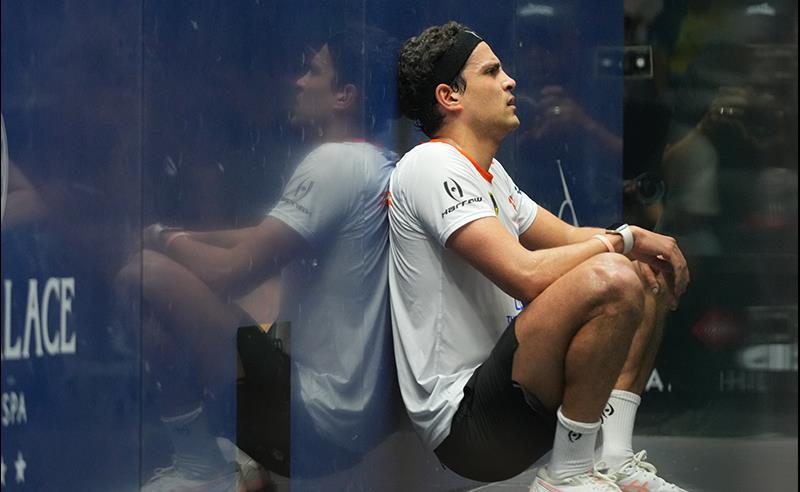
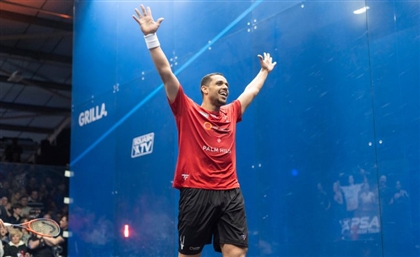
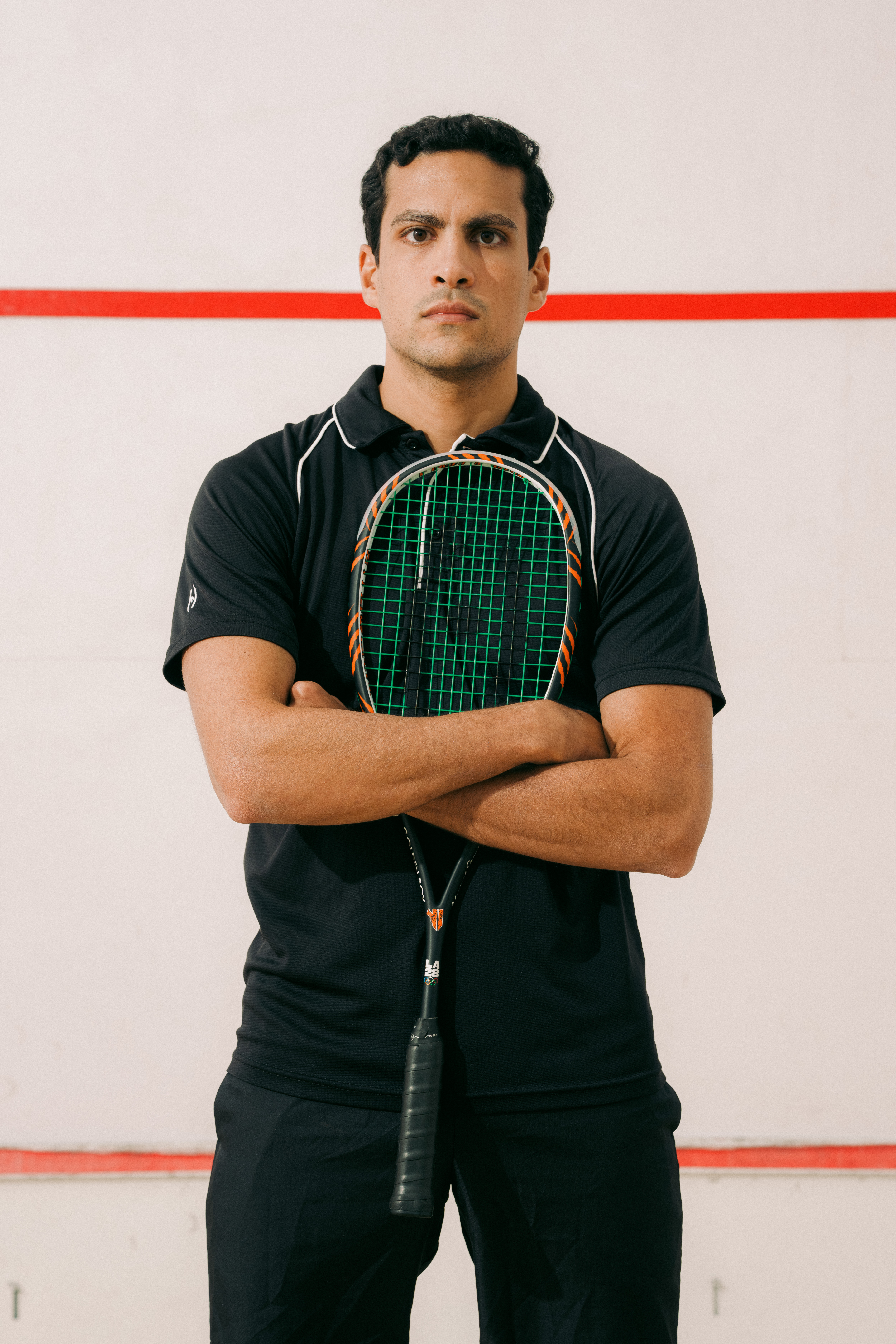
Youssef Ibrahim walked out for his first World Championship final this past May in Cairo, in front of a home crowd, carrying a shoulder that had already given out on him twice that season.
The 27-year-old Egyptian squash player, known as "the Gunslinger" for the fearlessness of his shot-making, moved through it with a composure that only comes from having made peace with the worst that could happen.
He'd spent most of the 2025-26 PSA season fighting a shoulder that refused to stay in place. It first dislocated in October 2025, a one-off, or so it seemed.
Then it happened again in January, at the Tournament of Champions in New York, after a dive for a ball, and this time he spent a month and a half not knowing if he'd be able to compete at all.
 The orthopaedic surgeons were blunt: it would keep recurring until it was surgically repaired. For most professional athletes, that's the end of a season. For Ibrahim, it was the beginning of the best run of his career.
By the time he walked out for his final at the CIB Palm Hills PSA World Championships, he already knew what was coming afterwards.
"Going into the final, I already knew I'd need surgery once the tournament was over. I talked to my team about it constantly, I was with them match after match, and the doctor was with me every day."
"Knowing that made me grateful for the moment I was in, because I knew I was about to be away from the game for a long time," he says. "I just tried to focus on what I had and not make excuses for myself. I wouldn't say I exceeded my expectations, but I did well given the circumstances."
 That composure was tested in the most literal way possible during his quarter-final against Paul Coll, when he collided into Coll's back while chasing down a drop shot. He went down hard, was treated courtside by the physio, and refused to give up the match.
"I got hit in the back and I fell. I was dizzy for a good minute, my brain just stopped working. It wasn't really about the injury, I just needed my breath to come back," he says.
What bothered him was the momentum. "I didn't want to leave the court. I didn't want the momentum to shift completely. I calmed down, got up, and kept going."
To reach the final, Ibrahim still had to get past Karim Gawad, the 2016 World Champion, in a semi-final that ran deep into the late hours. He won it in four tight games, 11-9, 9-11, 13-11, 11-4.
The decision to keep playing at all, through two separate dislocations in one season, wasn't made lightly, and it wasn't made alone.
"My brother wanted me to do the surgery as soon as possible," Ibrahim says, "but I told them it was my own decision to keep going through the World Championships, because of the ranking points for Olympic qualification."
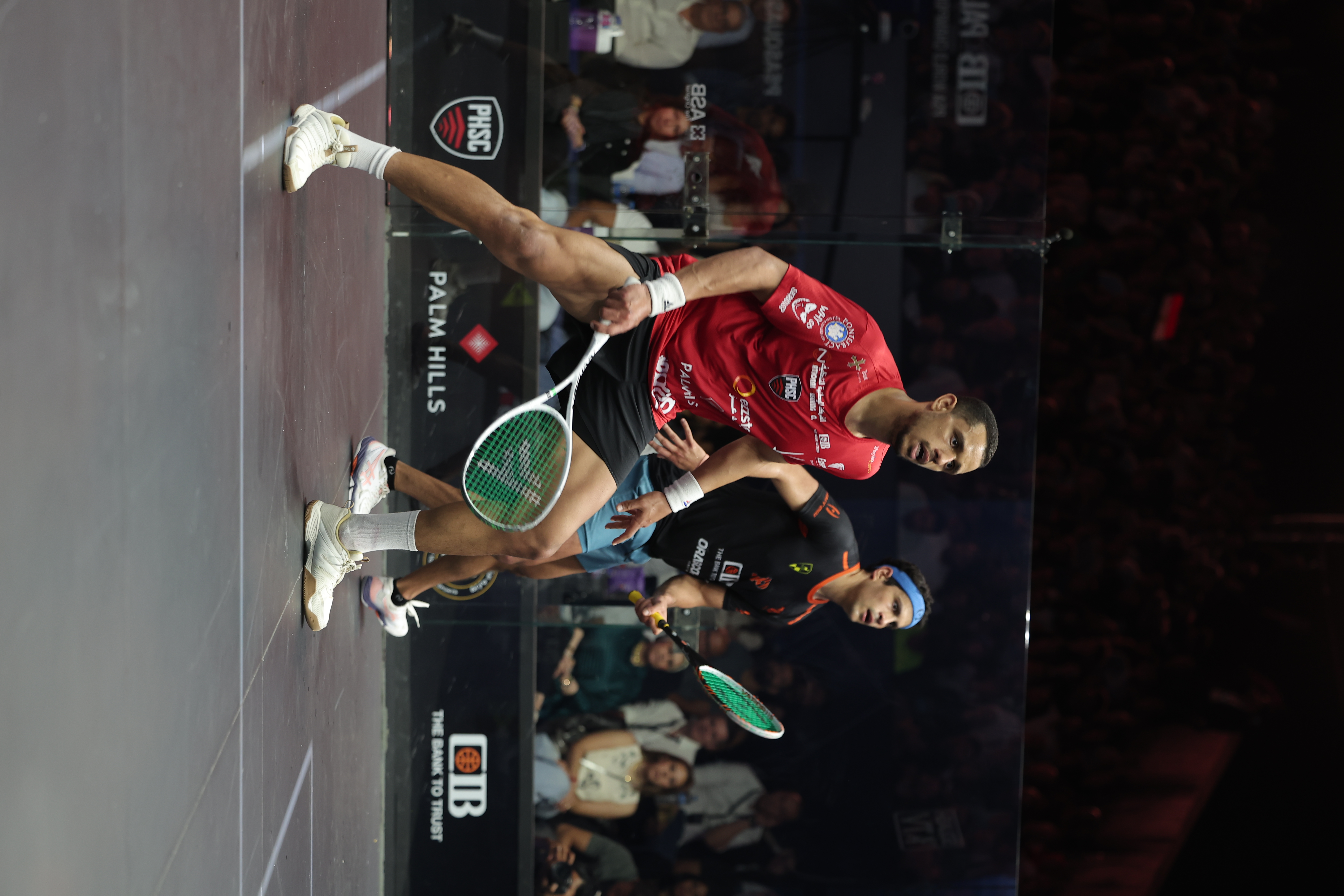 He kept playing and edited his game instead, cutting out the shots that put the most load on the joint. "There are shots that need a lot of shoulder force, and I cut those out as much as I could. I wanted to finish inside the top 8 or top 10, so that when I came back, I wasn't starting from zero. It was a risk nobody around me agreed with, but I did what was in my mind, and it was worth it."
Even his mother, he says, struggled to watch in silence. "She didn't say much about it, but it was hard for her to watch me get injured. She never wanted to stop me from doing something I'd already decided to do. Eventually, she accepted that the surgery was coming."
He lost the final to World No. 1 Mostafa Asal in straight games, in what became Asal's second World title. But it was Asal, in his own winner's interview, who called Ibrahim superhuman for playing on with the injury at all.
"It's a good thing to hear, of course. I've known Asal for a long time, we grew up together," Ibrahim says. "Against him I had to play at more than 100 per cent, because 70 per cent isn't enough. I didn't get past him, but he had a great season, and I respect that. I can't wait to play him again when I'm back."
What followed the final was the part nobody sees on a highlights reel: the surgery, and then the long, unglamorous stretch of not being able to do anything at all.
 "My goal is to get back to the best shape possible," he says. "The hardest part was the very beginning; I couldn't even go to the gym, after playing squash almost every day of my life."
Two years ago, he underwent surgery for a chronic knee issue involving cartilage and meniscus damage that once had him doubting whether he'd play professionally again. That history shows in how calmly he's handling this one.
"I'm not in a hurry. It's sensitive, but it's rewarding. If it keeps going like this, I'll start playing tournaments in November," he says. The US Open in Philadelphia runs from 1 to 7 November.
It's the in-between space, not competing yet not fully recovered, that seems to have changed him the most. Ibrahim has become known among fellow players for documenting his rehab publicly, step by step, rather than simply disappearing and reappearing months later in better shape.
"I've got a lot of free time now, doing things that have nothing to do with squash," he says. "When you're competing, there's no time to think or reflect, you're too busy trying to win the next match. Now I have time to actually appreciate last season. You don't feel it at the moment. You only appreciate it looking back."
That doesn't mean the sidelines have been peaceful. Speaking in late September, with the Qatar Classic just wrapped up in Doha, Ibrahim has spent the past two weeks watching a tour he can't yet compete on, and it's had its own particular ache.
 "Once a tournament starts, part of you just wants to be out there playing," he says. He told his coach he didn't want to watch any of it, worried it would only make the wait harder. He watched the highlights anyway. "When I do, I just want to play. I feel like I'm behind, like I need to catch up. I'm hungry for it."
The path back is already mapped out in stages. "I'm starting with conditioned games against lower-ranked players, then stepping up to full one-on-one level," he says.
"Practice matches from mid-October, and if that goes well, I'll start playing high-ranked opponents in early November."
Right now, the focus is simpler than results, just getting his body reacquainted with the game. "It's mostly about getting a feel for the ball again, hitting my targets. The pace and the movement on court aren't smooth yet."
The first week back was the hardest. "This week I finally felt like I was hitting my targets again."
It's a strange thing, to ask a 27-year-old who beat former world No.1 Mohamed El Shorbagy, the top seed, at the Qatar Classic while still playing college squash at Princeton, and who has already touched a career-high ranking of five in the world, whether an injury changes how he feels about the sport that made him. Ibrahim's answer suggests it hasn't, not fundamentally.
"This is part of the journey," he says. "It's not the worst injury I've ever had, every athlete deals with injuries, this is what we train our whole lives for. It's the worst part of the journey, for sure, but when you look back, you see it was all worth it."
- Previous Article World’s First Formula E Karting Experience Opens in Abha