

Why Did Egypt Host a European Basketball Championship?
The North African nation is still the only country from outside Europe to have won its continental title.
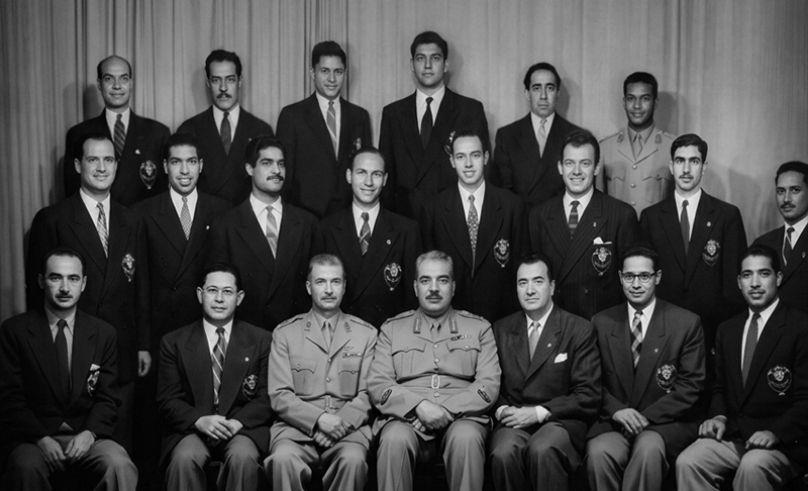
On the heels of geopolitical tensions in 1949, Egypt’s national basketball team achieved a feat that, to this day, has yet to be repeated when they hosted and won the European Basketball Championship.
A team from outside of a continent winning a continental sporting title does sound like a typo in the record books. But it was real, and, to this day, the North African nation remains the only non-European country to have won the tournament.
-ee4b2341-be8e-42ce-a456-003805202d93.jpg) EuroBasket came to Cairo that year through a strange set of circumstances. The Soviet Union, who earned the right to host the tournament as the winners of the previous edition, didn’t participate. Czechoslovakia, who hosted the tournament two years prior, stepped away from doing so again.
So, it fell to Egypt, whose previous experiences at the tournament paved the way for this unlikely turn of events. In 1937 — the country’s second appearance on the European Basketball stage — they won six out of seven games, finishing third behind the Soviets and the Czechs.
EuroBasket came to Cairo that year through a strange set of circumstances. The Soviet Union, who earned the right to host the tournament as the winners of the previous edition, didn’t participate. Czechoslovakia, who hosted the tournament two years prior, stepped away from doing so again.
So, it fell to Egypt, whose previous experiences at the tournament paved the way for this unlikely turn of events. In 1937 — the country’s second appearance on the European Basketball stage — they won six out of seven games, finishing third behind the Soviets and the Czechs.
-c8d2763a-a531-44ac-a062-a1934ee7b4c7.jpg) Fast-forward 12 years and the stage was set, against the backdrop of the desert, under the open sky in Cairo’s Heliopolis suburb, for a set of outdoor games that collectively became one of the lesser-known facts in basketball history.
By then, this group had already been through enough together to understand how to win. The 1937 debut in Riga, Latvia, had been a tough introduction with two played losses and three forfeited games. A decade later in Prague, they finished third, winning six of seven and proving they could compete with Europe’s top teams. In Cairo, that growth showed.
Fast-forward 12 years and the stage was set, against the backdrop of the desert, under the open sky in Cairo’s Heliopolis suburb, for a set of outdoor games that collectively became one of the lesser-known facts in basketball history.
By then, this group had already been through enough together to understand how to win. The 1937 debut in Riga, Latvia, had been a tough introduction with two played losses and three forfeited games. A decade later in Prague, they finished third, winning six of seven and proving they could compete with Europe’s top teams. In Cairo, that growth showed.
-25087742-81e9-445b-af0f-f7f0a76b5893.jpg) Egypt opened the tournament strong, taking care of Syria 71–44 and Lebanon, both of which were invited to round-out the championship and keep it competitive due to the lack of participation with a score of 57–30, setting a rhythm early.
From there, the level rose and, in turn, Egypt rose with it. Turkey, Greece, and France all came next, and all fell. Six games, six wins, and clean run to the title.
Egypt opened the tournament strong, taking care of Syria 71–44 and Lebanon, both of which were invited to round-out the championship and keep it competitive due to the lack of participation with a score of 57–30, setting a rhythm early.
From there, the level rose and, in turn, Egypt rose with it. Turkey, Greece, and France all came next, and all fell. Six games, six wins, and clean run to the title.
Albert Fahmy Tadros led the team, providing a steady presence, with playing experience in the 1947 tournament and the Olympics. Abdel Rahman Hafez Ismail carried the scoring, averaging 14 points per game and giving Egypt a reliable option every night.
-0a2cceba-ca67-4670-92c6-1b29fbd1aa0f.jpg) Around them was a balanced squad including Hussein Kamel Montasser, Nassim Salah El-Din, Fouad Abdel Meguid El-Kheir, Walid Shafik Saleh, Gabriel Katafago, Youssef Mohamed Abbas, Mohamed El-Rashidi, Youssef Kamal Abou Auf, Medhat Mohamed Youssef, and Mohamed Mahmoud Soliman — plus two players remembered simply as “Saki” and “Batanouni.”
That success proved to be short-lived, with Egypt finishing fifth the following year at the first FIBA Basketball World Cup in Argentina. Three years later, the country ended up in the middle of the pack in what would be their final EuroBasket appearance ending in them being the 8th-placed team out of 17.
Around them was a balanced squad including Hussein Kamel Montasser, Nassim Salah El-Din, Fouad Abdel Meguid El-Kheir, Walid Shafik Saleh, Gabriel Katafago, Youssef Mohamed Abbas, Mohamed El-Rashidi, Youssef Kamal Abou Auf, Medhat Mohamed Youssef, and Mohamed Mahmoud Soliman — plus two players remembered simply as “Saki” and “Batanouni.”
That success proved to be short-lived, with Egypt finishing fifth the following year at the first FIBA Basketball World Cup in Argentina. Three years later, the country ended up in the middle of the pack in what would be their final EuroBasket appearance ending in them being the 8th-placed team out of 17.