

This Maadi Spots Shows What Pilates Was Like Before the Digital Age
Analog is taking its clients back to the 1960s, when Pilates was nothing more than mindfulness, control, and some wooden springs.

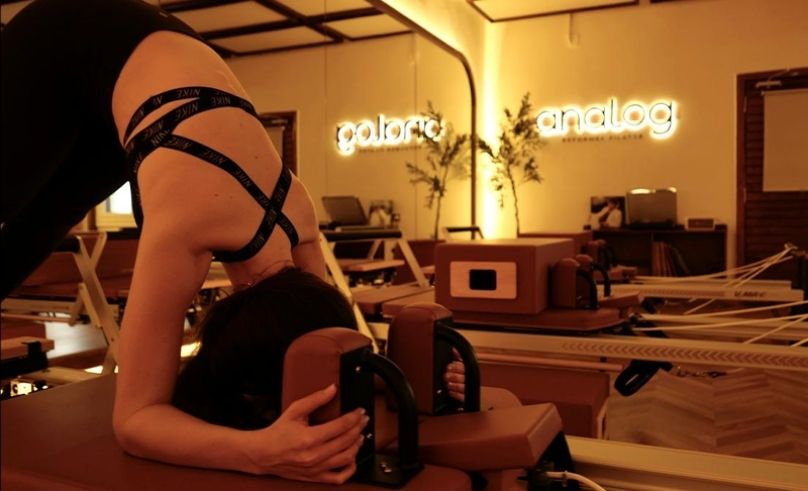
Tucked into the leafy green streets of Maadi is a Pilates studio with an unusual ambition: to be basic. Not dull or uninspired, but deliberately stripped back. After all, “the basics work,” so why not return to them?
This is the goal of Analog Reformer Pilates - a classical and contemporary studio that is deliberately stepping away from today’s fast-paced fitness culture to bring exercise back to its fundamentals.
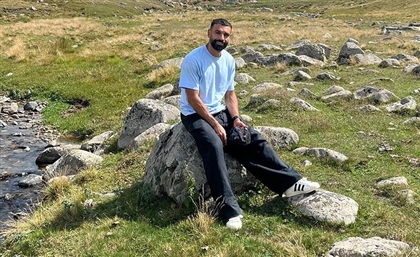
Behind the concept are three founders - Mohamed Abbas, Mariam Ahmed and Omar Ahmed - who came together with a shared vision of returning Pilates to its roots. In their studio, there are no TVs, no flashing screens, and no fitness trackers. Instead, music crackles softly from a record player as springs stretch and release on wooden reformers.
“I really got into Pilates over the last two years," Abbas tells SceneSports. "I had so many imbalances in my body and so many injuries - either from standing too much or sitting at a desk for prolonged periods of time - my posture had shifted alot and my body was aching 24/7. I was living with so much pain every day for years.”
-1f16f80c-e629-4868-b6e7-944ed586fefc.jpg) The more he did Pilates. and the more he learned about it, the more mindful he became about the ways his body moved and aligned. “I really think I fell in love with Pilates. I started to have more control over my body, and most of the imbalances I experienced before have gotten much better.”
Realising how much Pilates had helped him pushed Abbas to start a business of his own. He searched the world for inspiration - Paris, Dubai, Rome - visiting studios to understand what resonated with him most. “The ones I really liked were the calm ones. The ones where, after you’ve finished a workout, you feel calm and mindful - not shaking on all fours,” he laughs.
“That is when I decided Analog should be just a classical Pilates studio.”
The studio’s concept was shaped by more than Abbas’s personal recovery. It was also influenced by the history of Pilates itself.
Developed in the early 20th century by German physical trainer Joseph Pilates, the method, originally called ‘Contrology’, focused on controlled movement, breath and alignment. Pilates, who spent part of the First World War in a British internment camp, began refining a system of exercises using minimal equipment. He even adapted hospital beds with springs to create an early model of what would later become the reformer machine.
The more he did Pilates. and the more he learned about it, the more mindful he became about the ways his body moved and aligned. “I really think I fell in love with Pilates. I started to have more control over my body, and most of the imbalances I experienced before have gotten much better.”
Realising how much Pilates had helped him pushed Abbas to start a business of his own. He searched the world for inspiration - Paris, Dubai, Rome - visiting studios to understand what resonated with him most. “The ones I really liked were the calm ones. The ones where, after you’ve finished a workout, you feel calm and mindful - not shaking on all fours,” he laughs.
“That is when I decided Analog should be just a classical Pilates studio.”
The studio’s concept was shaped by more than Abbas’s personal recovery. It was also influenced by the history of Pilates itself.
Developed in the early 20th century by German physical trainer Joseph Pilates, the method, originally called ‘Contrology’, focused on controlled movement, breath and alignment. Pilates, who spent part of the First World War in a British internment camp, began refining a system of exercises using minimal equipment. He even adapted hospital beds with springs to create an early model of what would later become the reformer machine.
-a35bd89a-6511-4fc2-9488-29c052a71be0.jpg) While imprisoned during the First World War, Pilates was forced to strip movement and exercise down to their bare essentials with limited space and minimal equipment. He drew inspiration from the intuitive movements of nature and animals - particularly cats - as well as from his own experiences as both a prisoner and an athlete. Later, he opened a studio in New York City with his wife, Clara, next to a ballet studio, where dancers and performers flocked to the method for strength and control.
Analog seeks to return to these early practices. “The thing is,” says Abbas, “when I began to really look at Pilates - when I dissected it - I realised it has nothing to do with technology. It was created simply with a bunch of springs and hospital beds.”
That connection to the method’s origins is also reflected in how the studio’s instructors were trained. At Analog, Abbas and his partners try to bring that historical lineage directly into their classes. Abbas himself learned Pilates from Heba Abdigawad, who trained with one of Joseph Pilates’s direct students, placing him only a few generations removed from the method’s founder.
While imprisoned during the First World War, Pilates was forced to strip movement and exercise down to their bare essentials with limited space and minimal equipment. He drew inspiration from the intuitive movements of nature and animals - particularly cats - as well as from his own experiences as both a prisoner and an athlete. Later, he opened a studio in New York City with his wife, Clara, next to a ballet studio, where dancers and performers flocked to the method for strength and control.
Analog seeks to return to these early practices. “The thing is,” says Abbas, “when I began to really look at Pilates - when I dissected it - I realised it has nothing to do with technology. It was created simply with a bunch of springs and hospital beds.”
That connection to the method’s origins is also reflected in how the studio’s instructors were trained. At Analog, Abbas and his partners try to bring that historical lineage directly into their classes. Abbas himself learned Pilates from Heba Abdigawad, who trained with one of Joseph Pilates’s direct students, placing him only a few generations removed from the method’s founder.
-21a6c7af-a0cb-4077-93aa-d437b11b517a.jpg) Learning from Abdigawad was crucial for Abbas. Through her teaching, he felt closely connected to the original philosophy of the practice, something he wanted to preserve when building his own studio. As he began assembling his team, he sought instructors who were similarly close to that lineage.
“If Heba is the third line from Joseph Pilates, then her students are the fourth line.”
Today, several of the studio’s instructors - including Mariam Ahmed, Nawal Saleh, Farah Abed and Zeina Madwar - were trained within this same lineage. For Abbas and his partners, this connection helped shape the philosophy of the studio.
“I think it had a huge role,” he says. “It completes the vision.”
Learning from Abdigawad was crucial for Abbas. Through her teaching, he felt closely connected to the original philosophy of the practice, something he wanted to preserve when building his own studio. As he began assembling his team, he sought instructors who were similarly close to that lineage.
“If Heba is the third line from Joseph Pilates, then her students are the fourth line.”
Today, several of the studio’s instructors - including Mariam Ahmed, Nawal Saleh, Farah Abed and Zeina Madwar - were trained within this same lineage. For Abbas and his partners, this connection helped shape the philosophy of the studio.
“I think it had a huge role,” he says. “It completes the vision.”
-609f740c-5189-437b-8a1b-695d322d5de6.jpg) That vision is centred on what he calls a return to the fundamentals of the practice. Rather than high-intensity routines or social-media-friendly workouts, Analog emphasises slower, controlled movement.
“People tend to forget the basics of Pilates,” he says. “Which are really just movement, mindfulness and control.”
"Inside our classes, we try to use as little technology as we can: people store their phones in lockers before entering the studio, we don’t have any TVs inside - music comes only from a record player. The vacuum cleaner is basically the only piece of technology we have,” says Abbas.
Designed by Abbas’s wife, Mahira Ahmed, the studio's layout builds on this vision. Wooden walls bring you straight back to the 1970s, while vintage details are sprinkled throughout the studio. Even the logo reflects the concept: five coloured stripes referencing VHS tape colours can be seen on the sides of their wooden reformer machines.
Part of Analog’s mission is also educational. In Egypt, Pilates is often reduced to reformer classes or mat workouts, but Abbas stresses that the system is far broader.
“There’s the chair, then the ladder barrel, or the spine corrector,” he explains. “There are five levels of Pilates. It’s not just a few moves. We’re trying to educate people about what the real Pilates is.”
That vision is centred on what he calls a return to the fundamentals of the practice. Rather than high-intensity routines or social-media-friendly workouts, Analog emphasises slower, controlled movement.
“People tend to forget the basics of Pilates,” he says. “Which are really just movement, mindfulness and control.”
"Inside our classes, we try to use as little technology as we can: people store their phones in lockers before entering the studio, we don’t have any TVs inside - music comes only from a record player. The vacuum cleaner is basically the only piece of technology we have,” says Abbas.
Designed by Abbas’s wife, Mahira Ahmed, the studio's layout builds on this vision. Wooden walls bring you straight back to the 1970s, while vintage details are sprinkled throughout the studio. Even the logo reflects the concept: five coloured stripes referencing VHS tape colours can be seen on the sides of their wooden reformer machines.
Part of Analog’s mission is also educational. In Egypt, Pilates is often reduced to reformer classes or mat workouts, but Abbas stresses that the system is far broader.
“There’s the chair, then the ladder barrel, or the spine corrector,” he explains. “There are five levels of Pilates. It’s not just a few moves. We’re trying to educate people about what the real Pilates is.”
-3670bbe4-2a1e-4a02-b6b8-cbbe3c26859b.jpg) They also hope to broaden who participates in the practice. “I'm trying to attract more men to the studio. The misconception that Pilates is only for women is really wrong - afterall, Pilates was created by a man,” says Abbas. For him, encouraging more men to try Pilates comes from personal experience. The practice helped him overcome pain and imbalance, and he hopes it can do the same for others.
“I’m not telling them not to go to the gym,” he says. “I’m telling them to do Pilates so you can be better at the gym, better at your sport.” The practice focuses on alignment, breath, and controlled movement, helping people understand how their bodies actually work. Over time, that awareness can translate into better posture, stronger core stability, and more efficient movement in everything from weightlifting to running.
That emphasis on fundamentals fits into a broader philosophy behind the studio. “People want to go back to basics,” he says. “Not just in working out - in the way they’re living. No phones and no technology for an hour a day is something people look forward to.”
The appeal of their studio is already clear. After just one month since its opening, Analog Reformer Pilates has already welcomed more than 500 clients. But Abbas hopes the concept will eventually expand beyond Pilates into a wider wellness hub, potentially including practices such as breathwork, acupuncture and sound healing.
When asked what he wants people to feel when leaving a class at Analog, his response is simple. “Calm, mindful, in control;” a rarity in today’s fast-paced culture. “That's basically what pilates was all about in the 1960s, and is exactly what we're all about today. We're trying to give you that vibe through the design, through the workout, and through the teachers we have.”
They also hope to broaden who participates in the practice. “I'm trying to attract more men to the studio. The misconception that Pilates is only for women is really wrong - afterall, Pilates was created by a man,” says Abbas. For him, encouraging more men to try Pilates comes from personal experience. The practice helped him overcome pain and imbalance, and he hopes it can do the same for others.
“I’m not telling them not to go to the gym,” he says. “I’m telling them to do Pilates so you can be better at the gym, better at your sport.” The practice focuses on alignment, breath, and controlled movement, helping people understand how their bodies actually work. Over time, that awareness can translate into better posture, stronger core stability, and more efficient movement in everything from weightlifting to running.
That emphasis on fundamentals fits into a broader philosophy behind the studio. “People want to go back to basics,” he says. “Not just in working out - in the way they’re living. No phones and no technology for an hour a day is something people look forward to.”
The appeal of their studio is already clear. After just one month since its opening, Analog Reformer Pilates has already welcomed more than 500 clients. But Abbas hopes the concept will eventually expand beyond Pilates into a wider wellness hub, potentially including practices such as breathwork, acupuncture and sound healing.
When asked what he wants people to feel when leaving a class at Analog, his response is simple. “Calm, mindful, in control;” a rarity in today’s fast-paced culture. “That's basically what pilates was all about in the 1960s, and is exactly what we're all about today. We're trying to give you that vibe through the design, through the workout, and through the teachers we have.”
- Previous Article Cairo Runners’ Annual Earth Day Race to Take Place April 24
- Next Article All You Need to Know About the 100 Miles Summit